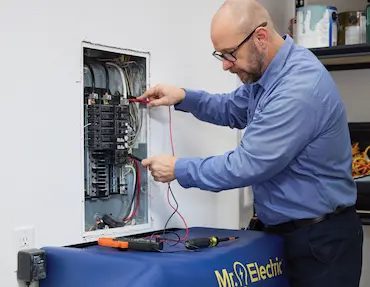
Every year brings its own set of challenges for Tampa Bay homeowners, but 2026 has concentrated five electrical issues into a single moment that is hitting harder than any one of them would individually. TECO bills have climbed 82% in five years. Hurricanes Helene and Milton left damage that many homes still have not fully addressed. Insurance carriers are scrutinizing electrical systems more aggressively than ever through 4-point inspections. Panels installed in the 1960s through 1990s are buckling under modern electrical demands. And a code change that most homeowners do not even know about now requires whole-home surge protection on every new panel installation.
Learn moreMr. Electric of Tampa Bay Blog
Shared Resources for Your Home Needs
Fireplace Heater Safety Tips
Electric fireplaces are a much less expensive alternative to adding a wood-burning fireplace to your home. Electric models provide a significant amount of heat
Showing 11 Results for Home Safety
No property manager or building owner wants to spend more on electrical maintenance than necessary. That instinct makes sense. Budgets are finite, tenant expectations are real, and every dollar spent on preventative maintenance is a dollar not available for capital improvements, leasing incentives, or reserves. The challenge in Tampa Bay is that the cost of skipping preventative electrical maintenance is not zero; it is deferred damage that compounds until a storm, an inspection, or an equipment failure converts a maintenance line item into an emergency capital expenditure.
Learn moreTampa sits in the lightning capital of the United States. Hillsborough County averages 1.2 million lightning strikes per year, and the combination of extreme heat, humidity, salt air, and aging housing stock creates electrical safety risks that homeowners in Hyde Park, Old Northeast, Historic Kenwood, and Carrollwood should take seriously. These are the five electrical safety upgrades that deliver the greatest protection per dollar for Tampa homes in 2026, ranked by impact.
Learn moreIf you own a home in a flood-prone part of Tampa Bay, storm prep is not just about shutters, sandbags, and trimming trees. It is about protecting the electrical system that determines whether your home is safe, habitable, and ready to recover after a hurricane. For homeowners along Bayshore Boulevard, on Davis Islands, across South Tampa’s low-lying blocks, in waterfront Clearwater, and in St. Petersburg neighborhoods like Historic Old Northeast, electrical preparation before June 1 can reduce safety risks, shorten post-storm downtime, and prevent thousands in avoidable repair costs.
Learn moreIf your dock lights stopped working, the most common causes are a tripped breaker or GFCI, a failed timer or photocell, corrosion inside fixtures or junction boxes, water intrusion in wiring or enclosures, or damaged conductors from age, storms, or improper installation. On a Florida waterfront property, a dock lighting failure should be treated as an electrical safety issue first — not just a lighting inconvenience.
Learn moreBoats, lifts, dock pedestals, and shoreline power systems all operate in one of the harshest environments for electrical infrastructure: constant moisture, salt air corrosion, UV degradation, and mechanical vibration. For Tampa Bay homeowners with private docks on Davis Islands, Tierra Verde, St. Pete, and Clearwater, marine electrical safety is not optional — it is a code requirement, a liability issue, and a life-safety imperative. The same applies to boat owners relying on marina shore power and marina operators managing multi-slip facilities.
Learn more