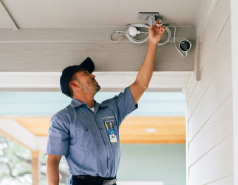
If you’re asleep when a carbon monoxide leak occurs, it will go unnoticed without an alarm sounding to wake you. Carbon monoxide can be fatal within minutes, depending on the level in the air. The Journal of the American Medical Association reports that approximately 2,100 people die from carbon monoxide poisoning each year in the United States. At Mr. Electric of Denton, we prioritize your safety, security, and peace of mind. Our licensed electricians have years of experience installing smoke and carbon monoxide detectors in homes in Denton, TX. We serve areas, including Argyle, Corinth, Krum, and Lake Dallas. If you currently have smoke or carbon monoxide detectors at your commercial or residential property, we can ensure they're installed correctly and function as they should. Contact your local Mr. Electric of Denton today for fast, reliable service.
Home Smoke & Carbon Monoxide Detector Installation in Denton, TX
Home Smoke & Carbon Monoxide Detector Installation in Denton, TX
Book Online

Service You Can Trust!
Let us know how we can help you today.
Preventing Carbon Monoxide Poisoning in Your Home
Some things you can do to protect your family from carbon monoxide poisoning in your home include the following:
-
Install detectors on every level of your home and one outside each bedroom.
- Consider the installation of smart carbon monoxide detectors that send alerts to all connected smartphones.
- Change the batteries in your devices every six to 12 months.
- Never operate anything gas-powered inside your home or garage (generators, vehicles, etc.)
- Ensure your vehicle is turned off when parked in the garage, even if the garage door is open.
- Schedule annual inspections with a licensed appliance professional for all the gas appliances in your home.
- Never use flameless chemical heaters indoors or inside enclosed spaces.
- If your gas appliance is malfunctioning or showing signs of needing repairs, have it inspected by a licensed electrician.
- Keep your flue open when lighting fires in the fireplace or furnace.
- Use exhaust fans in the appropriate locations of your home.
- Know the difference between your smoke detector alarm and carbon monoxide detector alarm.
- Contact your local fire department if you can't afford a carbon monoxide detector. Many programs and resources are available to help low-income households acquire these life-saving devices.
Frequently Asked Questions About Smoke & Carbon Monoxide Detectors in Denton
Residential & Commercial Services





We have the power to make things better.®